The sky, one question at a time
Short guides to what happens in the sky, why it happens, and how to find it in Sky42.
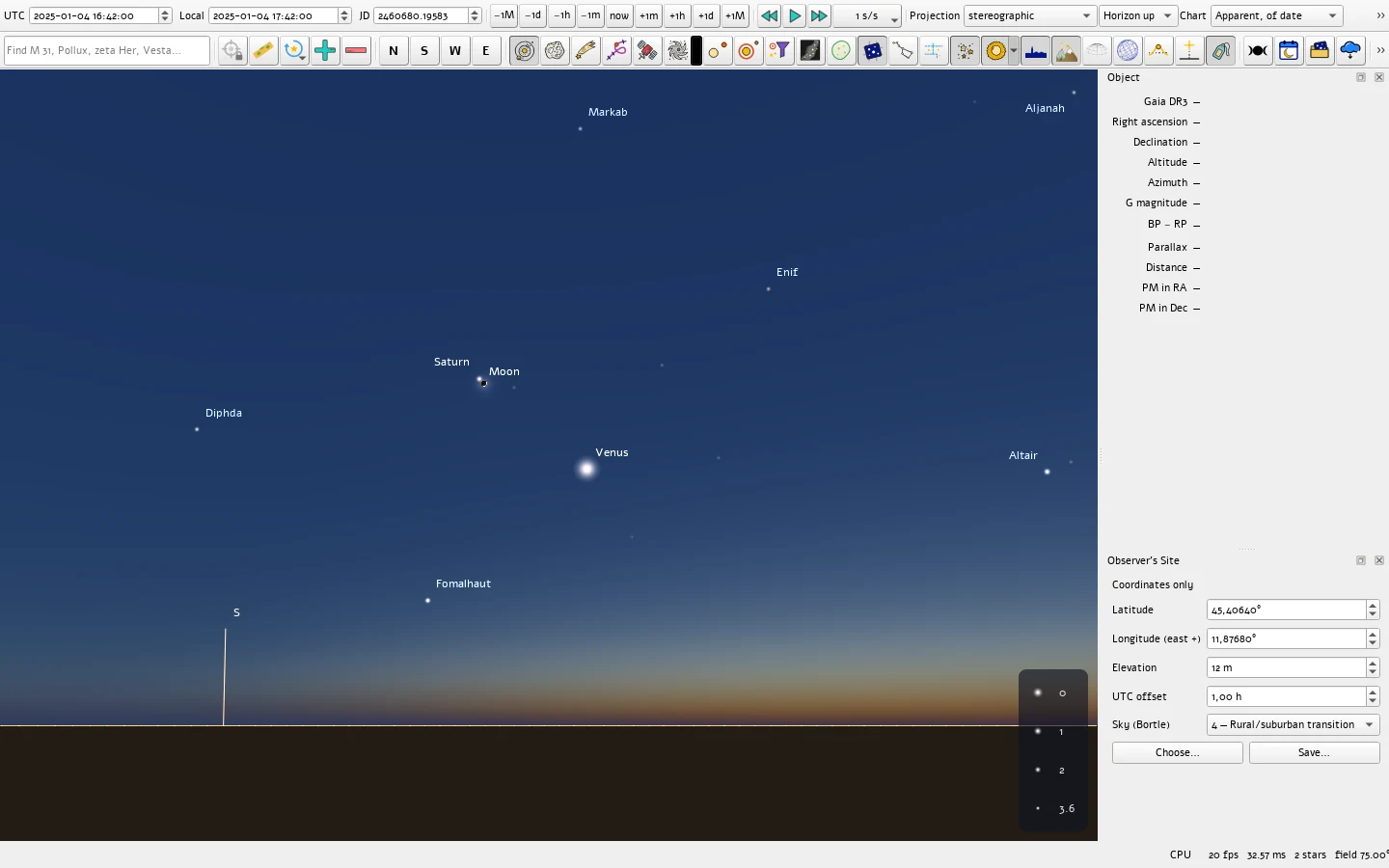
Why use planetarium software — and why Sky42?
What a planetarium does for you before, during and after an observing session, and what Sky42 adds to it.

Lunar libration: see beyond the Moon's familiar face
Why the Moon seems to rock from night to night, what that brings into view at the limb, and how to read it in Sky42.

24,000 deep-sky objects — and the photographic history behind them
Press X and a galaxy's symbol becomes a photograph from the Digitized Sky Survey. The story of the Palomar plates, and how to use them.
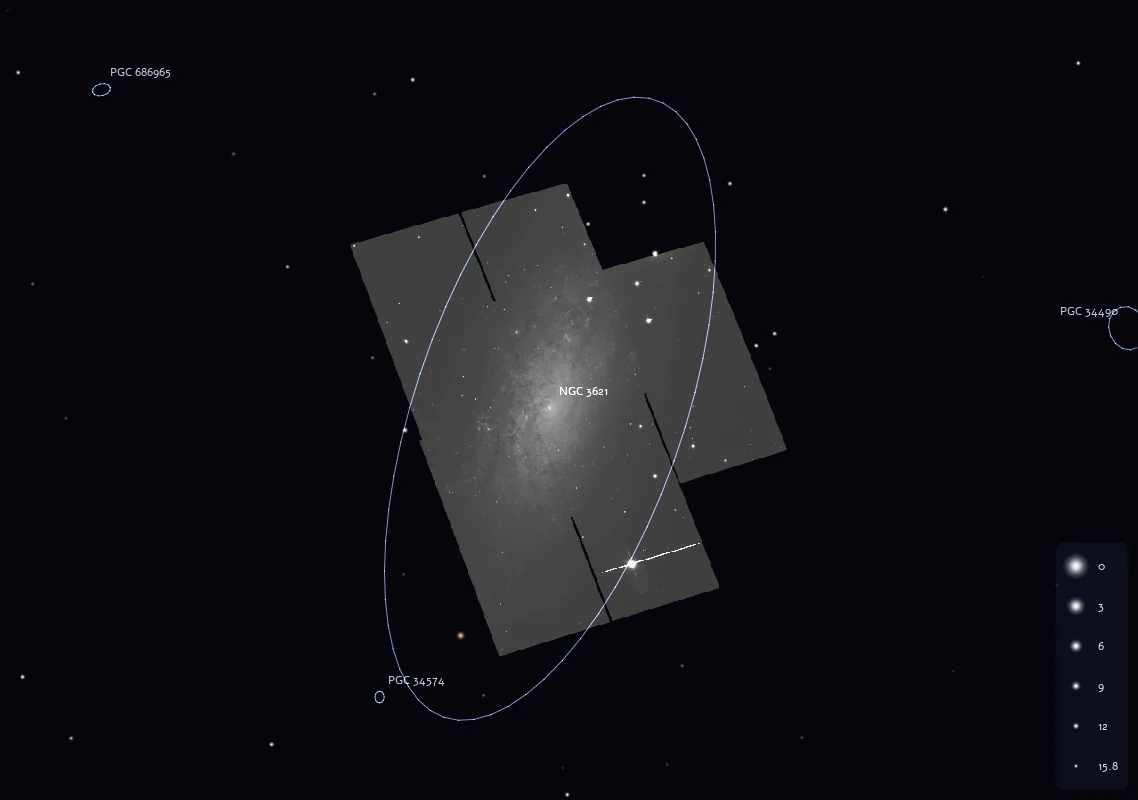
WCS image overlays: put your astrophotography on the sky map
What WCS and plate solving are, and how to lay your own solved photographs on the chart, among stars, galaxies and asteroids.

Reconstructing the ancient sky: why astronomical time travel is difficult
Ephemerides, the Earth's uneven rotation and Delta T — and the evening Aristotle watched the Moon cover Mars, at 19:53 ±6 min.

Why asteroids and comets are harder to follow through time
The planets go back five thousand years, asteroids nine centuries, comets about a year. What the model covers, and how well an orbit is known.
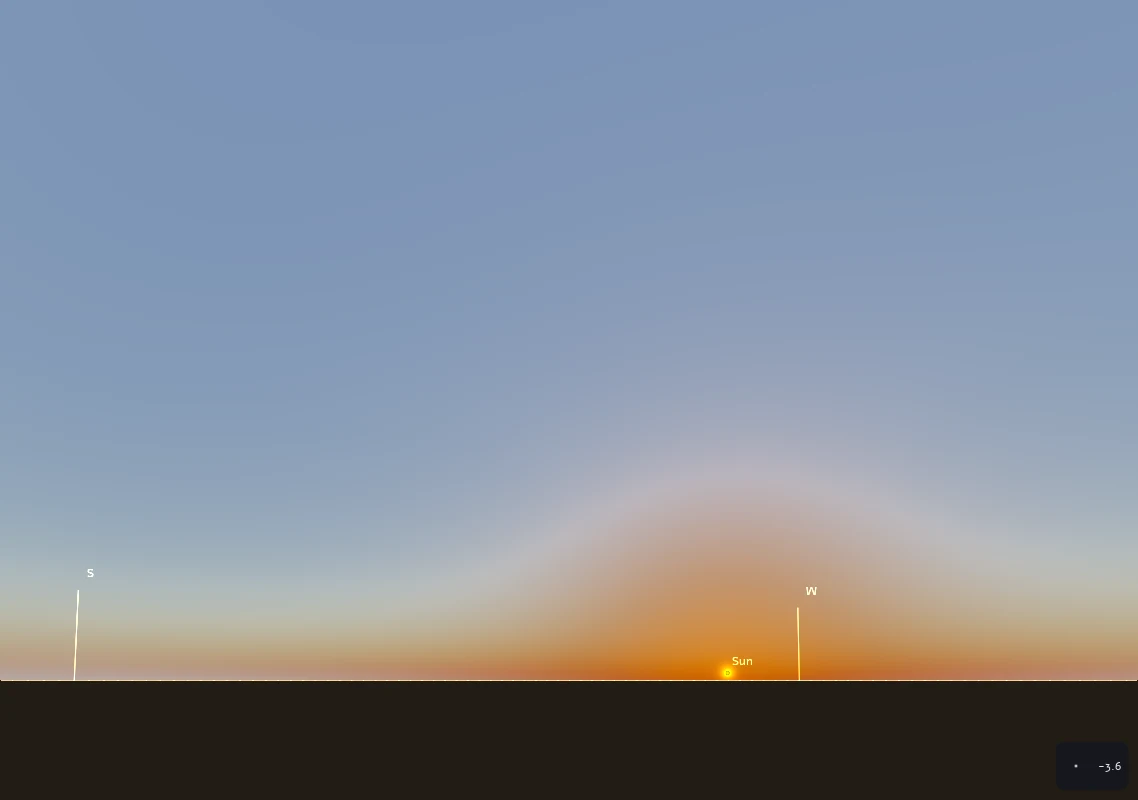
The simulated sky: twilight, moonlight and sunset
Why the sky is blue and sunsets orange, the Earth's shadow and the Belt of Venus, and how Sky42 paints them from a physical model of the air.

The colours of the stars, and how Sky42 draws them
Why stars have colours, why none is truly blue or red, what Gaia measures, and how a measured colour becomes the one on the chart.

Dark skies and the Bortle scale: what light pollution takes away
What the Bortle classes mean, how a city sky hides stars, galaxies and the Milky Way, and how Sky42 shows the sky of your own site.

Meteor showers: when, where and how many
Why meteors come in showers, what the radiant and the ZHR mean, why you see fewer than the ZHR says, and every shower of the year from your place.

Downloading more of the sky: which catalogues, how and why
Deeper Gaia stars, all the asteroids, the deep-sky photographs, past centuries and landscapes: what each download adds, and how large it is.